
An Extraordinary Challenge
- calendar_today January 26, 2026
- labelCase Studies

Inim fire protection serves one of Europe's largest mills, De Hompesche Molen.

De Hompesche Molen
The De Hompesche Molen, standing 37 meters tall
Built in a strategic location on a small hill, the De Hompesche Molen makes the most of its exposure to the wind. Its majestic blades, with a diameter of 26 meters, convert wind energy into rotational motion. This directly drives the central shaft and transmits the motion to the millstones, making it possible to process large quantities of wheat every day.
The interior of De Hompesche Molen
Inside the mill, the wheat is fed into a hopper that slowly conveys it toward the heart of the stone mill. There, two large overlapping discs—one stationary and one rotating—gradually crush it until it is transformed into flour. It is an ingenious, entirely mechanical process that has its roots in centuries-old milling traditions.
The Challenges of the Historic Site and Inim's Solution
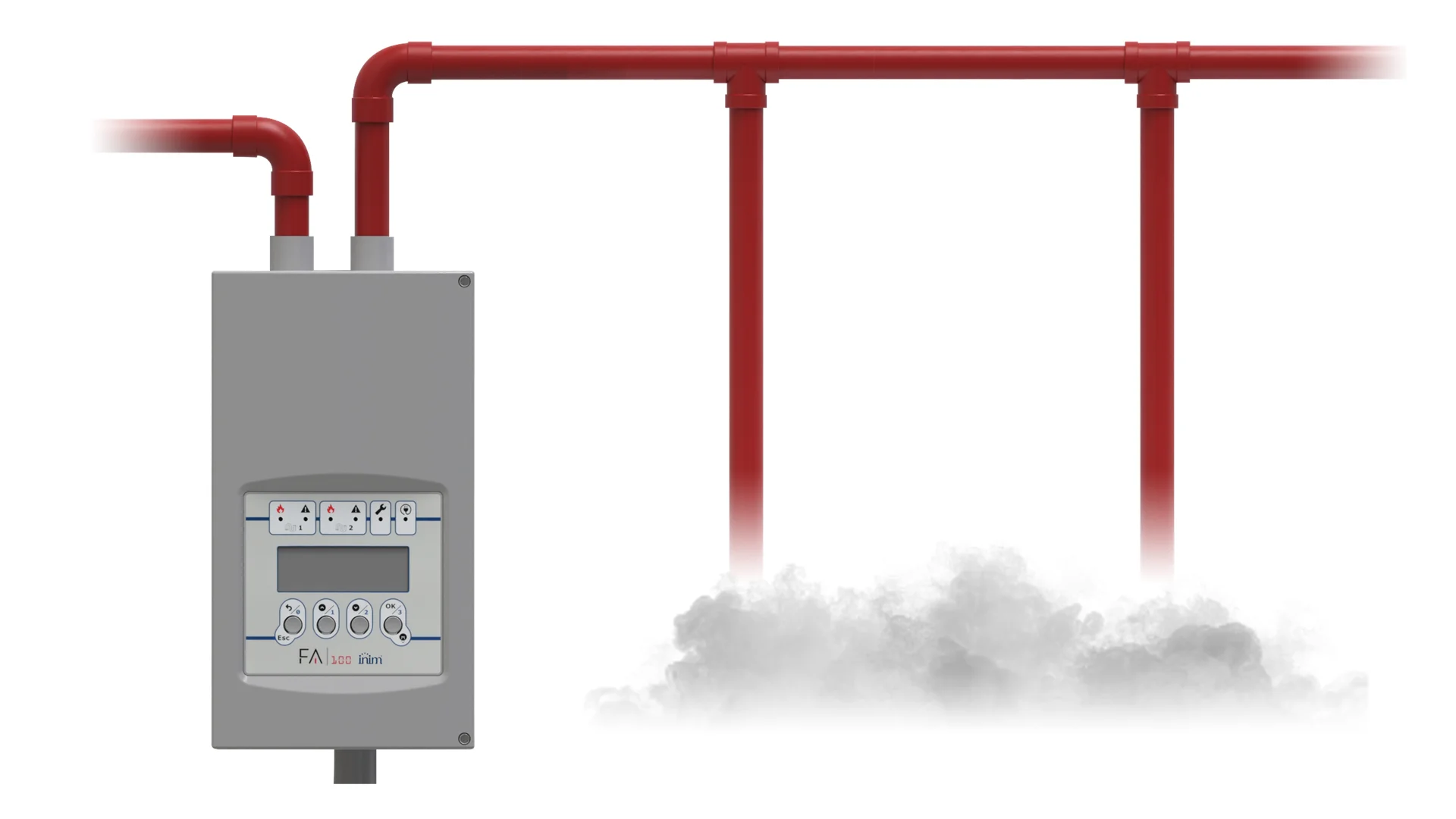
The mill, with its majestic brick-and-wood structure, required a fire protection system capable of meeting specific needs. Flour dust, a natural byproduct of milling, is extremely volatile and can pose a twofold risk to fire safety: Such fine dust makes it particularly difficult to rely on conventional smoke detection systems, which run the risk of repeatedly triggering false alarms. This presented a crucial challenge for the De Hompesche Molen, especially during operational demonstrations. As the dust gradually accumulates in cavities, hidden corners, and on surfaces that are not easily accessible, it can become a dangerous “silent detonator.” This accumulation creates ideal conditions for the development of smoldering fires, which, remaining hidden, can spread without being immediately detected. To address these issues, it was necessary to use a highly reliable system and technology specifically tailored to the facility’s needs. The solution proposed by Inim was the implementation of the FA100 aspirating smoke detection system, specifically designed for environments requiring specialized detection. The system, equipped with dust filters and advanced detection technology, offers high tolerance to airborne particles while ensuring responsive and reliable protection in the event of a fire outbreak. This installation has not only improved the mill’s safety but has also preserved the structure’s historical value, ensuring that monthly demonstrations and tourist visits could continue uninterrupted.
Technical partners for this project
SmartSD, Inim's distributor for the BENELUX region, provided the logistical, technical, and commercial support necessary for the project's success.
Bob de Vries
Project Advisor
He has been working with SmartSD since 2013 and closely monitors the Fire & Safety products.
FA100 Technology: Measured Particle Response
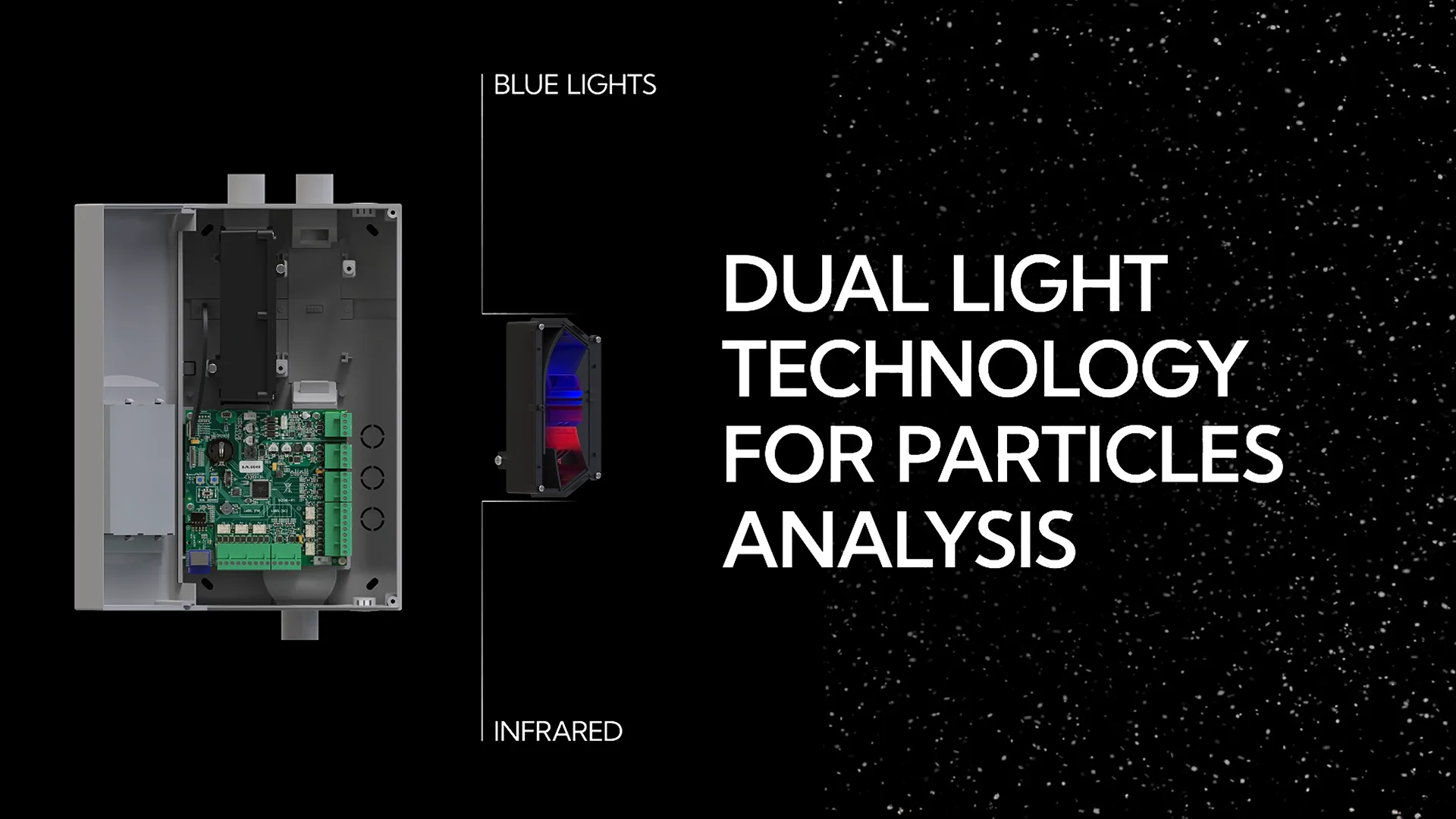
Optical-based aspirating smoke detectors operate on the Tyndall effect: the detector continuously draws in air and directs it into the device’s sampling chamber. Inside the chamber, a light source illuminates the space, and a photodetector is aimed at the same volume; however, due to the chamber’s labyrinthine design, the photodetector does not receive any light rays emitted by the light source. Any particles present inside the chamber will reflect the light beams from the source, deflecting a portion of them toward the photodetector; the detection of these light beams triggers the alarm.
As one might expect, a aspirating smoke detector with a conventional optical system will react indiscriminately to any type of particle, whether it be smoke, dust, or steam. The key principle of the technology is based on two light sources with different wavelengths: one in the infrared spectrum (red light) and one in the visible spectrum (blue light); the two sources are activated alternately. Particles of different diameters deflect the different frequencies differently; specifically, particles larger than one micron reflect more infrared light and less blue light; conversely, particles smaller than one micron will reflect less infrared light and more blue light. This combination allows the detector to distinguish between particles of different sizes, enabling the system to ignore larger particles—such as flour dust—which often cause false alarms in traditional systems.
Particle Analysis of the FA100 System
Combustion releases particles into the air that typically have a diameter of about 0.2 µm. An analysis of the diameters of the various contaminants found in the air shows that the smoke produced by combustion consists of particles with a diameter of less than one micron, while contaminants are larger than one micron. This combination allows the detector to distinguish between particles of different sizes, enabling the system to ignore larger particles—such as flour dust—which often cause false alarms in traditional systems. Only smoke particles, which are typically smaller, trigger the sensor, making the FA100 device highly effective and suitable for locations where a high level of safety is required.